Oddzwonimy do ciebie
I was looking for a good team to run our website. I wanted someone who would know what to do to turn it into profit and enquiries from new clients. Igor and his team are exactly those specialists.


A classic SEO audit checks if your site is visible on Google. An SXO audit goes a step further by checking whether the users who land on your site are actually doing what they should. Visibility without conversion is only half the job. You get one comprehensive analysis that combines both layers, resulting in a report with clear priorities.

In campaigns on Meta, Instagram, or TikTok, the majority of traffic comes from phones. If your mobile site doesn't deliver, your budget disappears faster than the user can make a decision.
Shopping and lead generation rarely happen at a computer these days. They happen in the evening, on the go, with a phone in hand. The phone is the moment of decision, not the computer screen.
Page layout, content, and CTAs must be designed for the user's phone and for sales. If a mobile site design doesn't guide the user to their goal, sales simply drop off.
Everything we do is measurable. We implement full tracking from day one so that decisions are based on data, not gut feeling. We know where your customers come from, how much it costs to acquire them, and which actions actually drive results.
This is the foundation of every project we manage.




SEO results depend largely on what we find in the initial SXO audit. A site with serious technical errors will grow more slowly than one with solid foundations.
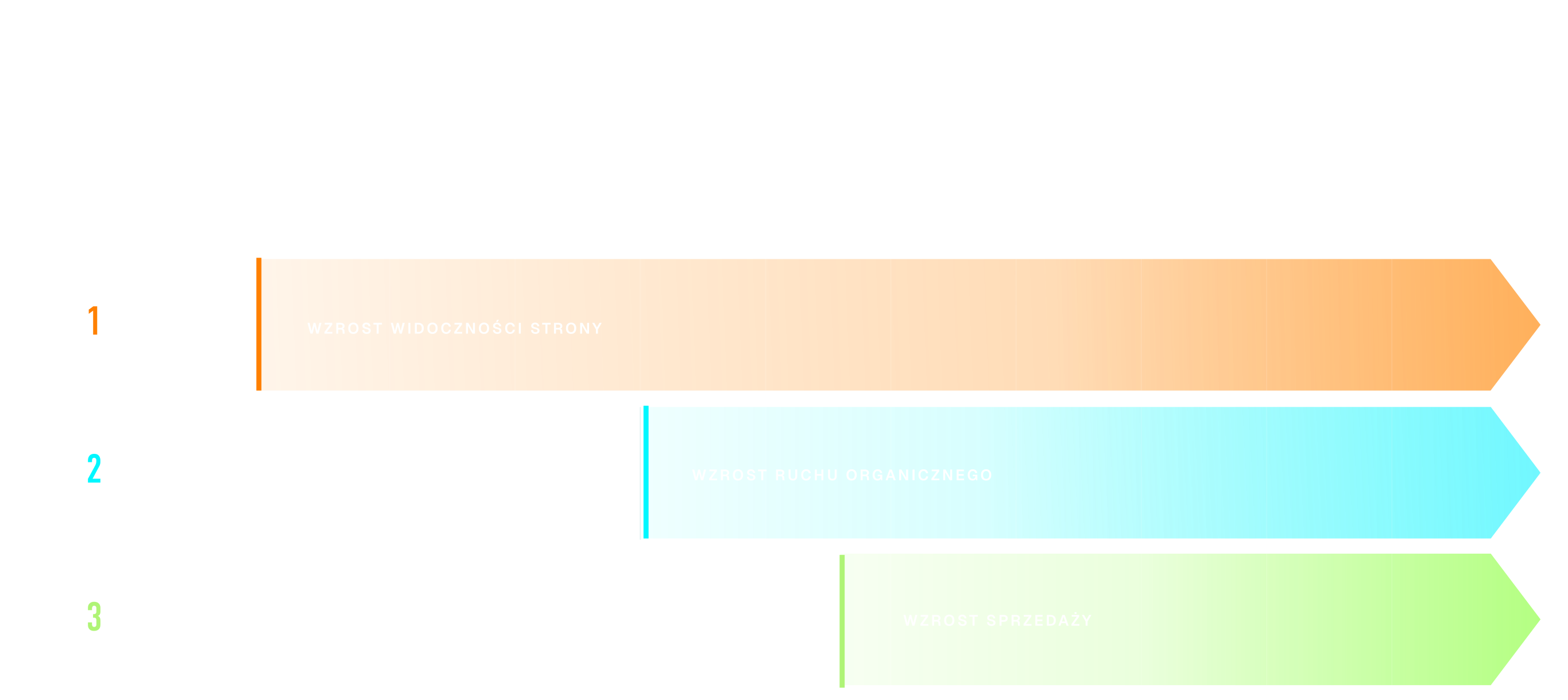
That is why the audit is not just a formality; it is a document that sets the pace and direction for all future work. The chart shows estimated stages based on our projects. The pace depends on your industry, the competition, and the state of your site at the start.
Pinpointing where the problem begins
GOAL: Determine if the site is losing potential due to SEO, UX, content, technical issues, or the conversion path.
Evaluating the foundations of visibility
GOAL: Identify errors that limit rankings, organic traffic, and Google's understanding of the site.
Looking at the site through the user's eyes
GOAL: Examine whether users quickly understand the offer upon landing on the page and know what to do next.
Finding where users drop off
GOAL: Identify barriers that block inquiries, sales, bookings, or other user actions.
Turning analysis into an implementation plan
GOAL: Provide a concrete roadmap of improvements that can be implemented in stages without chaos or guesswork.
Robert is responsible for SEO strategy and its execution in Sky projects.
He is the one who analyzes data, makes decisions, and ensures that SEO genuinely supports sales and leads. He doesn't delegate key areas to a "team," but personally oversees the direction of activities and the quality of implementations. This way, you know who is responsible for your results and
who you are talking to about the results.
Every month, you get a clear picture of your results along with an analysis of the situation
Regular online meetings to discuss results, priorities, and actions
You talk to the specialist who is actually managing your project
You have constant contact with the team via a shared messenger
Clear terms of cooperation. We retain clients with results, not contracts
We suggest directions, tests, and moves that make sense
Strategy, creative, performance, web, and analytics under one roof
We speak clearly, concretely, and without agency jargon


Since we started working with Igor and his team, the store we work on has genuinely grown and, above all, we understood that advertising can be done far better, smarter and more effectively. This is a partnership focused on growth and numbers, not empty promises.


Sky Agency is our third marketing company and we hope it will be the last. They run marketing for our two clothing brands and from the very beginning we felt they treat our cooperation in a truly individual way. Beyond marketing itself, they also help us grow the companies and look at everything much more broadly. What we value most is the communication. It is fast, to the point, and we constantly feel that someone is on top of things. There is never a problem getting an answer or discussing new ideas. You can tell this is built by people who genuinely put their heart and commitment into their work. Working like this simply feels calm and supported, and that matters a lot to us!

I have worked with Sky Agency for several years on various projects – a website, recruitment process automation, SEO. If I had to sum it up in one sentence: this is an agency where there is a real person behind the words, someone who takes responsibility. Igor as CEO does not disappear behind the team when things get difficult. That is rare and I value it. Together we built a tool for managing the recruitment of event staff – an application form, a candidate verification panel, automatic notifications, email integration. It sounds simple. At a scale of several hundred contractors a year and with the specifics of temporary work, it was a complex, non-standard brief. And I will say more: in difficult moments you see who you are really working with. And I do. I recommend them – especially to companies with non-obvious needs looking for someone who will dig deeper than a slide deck.

I recommend working with Sky Agency. Despite a very complex project requiring many custom solutions and integrations, everything was delivered professionally and in line with our expectations. The team stayed engaged throughout the whole process, and all key revisions were implemented until the final result was achieved.
.jpg)
We have been working with Sky Agency since 2022 – SEO, the rmcpolska.pl website and IT development support. More than four years of steady, well-organised cooperation. Igor and the team understood the specifics of our industry and are responsible for growing our online presence – from SEO to the new website we are designing together. IT tickets are handled quickly and without downtime. We value their straightforwardness, industry knowledge and partnership approach. We recommend them to any company looking for an agency that combines marketing with the technical side of business.









An SXO audit checks more than just whether a site is visible in Google. It also checks what happens next: whether the user understands the offer, finds the answer, sees the next step, and takes the action the company needs.
Because visibility alone is not enough. You can have organic traffic, ad clicks, and social media referrals, yet still lose sales if the site doesn't guide the user to their goal. The problem might lie in slow loading, a chaotic structure, poor content, unclear CTAs, a poorly designed mobile version, a lack of trust, or the fact that the page addresses a different intent than the one the user arrived with.
That is precisely why an SXO audit combines SEO, UX, and conversion. It analyzes visibility, technical aspects, content, information architecture, user behavior, and obstacles that may be stalling decisions. It is an examination of the site from two perspectives simultaneously: the search engine and the human.
As an SEO and SXO agency, we treat an audit not as an automated tool report, but as a business diagnosis. We look for areas where the site is losing rankings, traffic, trust, inquiries, and sales. The result is a prioritized report that shows what to fix first, why it matters, and what impact the implementation can have.
An SXO audit is a comprehensive website analysis that combines SEO positioning with user experience optimization. A classic SEO audit primarily answers the question: "Does the site have the right conditions to be visible in Google?" An SXO audit goes further and asks: "Does a user who has already reached the site have a reason to stay and take action?"
SXO, or Search Experience Optimization, combines two worlds: search engine traffic and the experience after landing on the site. As a result, the analysis doesn't stop at metadata, indexing, and links. It also covers content readability, section layout, user paths, performance speed, mobile responsiveness, forms, buttons, trust, the tone of the offer, and how well the site matches search intent.
A new subpage captures the difference very well: a classic SEO audit checks visibility in Google, while an SXO audit also checks whether users are doing what they should on the site. This is spot on, because visibility without conversion is only half the job.
Many SEO audits end with a list of technical issues: 404 errors, missing meta descriptions, overly long titles, imperfect headings, slow loading times, missing alt text, and redirect issues. These are important, but they don't always show the full picture.
A website can be technically sound and still fail to convert. It might have traffic but generate no leads. It might have well-optimized content but lead users through a chaotic journey. It might load quickly but fail to build trust. It might rank for keywords that make no business sense.
An SXO audit bridges the gap between technical data and user behavior. We don't just look for what a tool flags as an "error." We look at what is actually holding back your results. Sometimes the biggest problem isn't hidden in the code, but on the landing page itself, which fails to tell the user where they are and why they should stay.
An SEO audit focuses on a website's visibility in search engines. It checks whether Google can correctly index the site, understand its structure, read the content, and assign subpages to the appropriate queries. It covers technology, content, linking, indexing, URL structure, metadata, headers, redirects, errors, and the link profile.
An SXO audit adds a layer of user experience to this. It analyzes whether the website is convenient, readable, logical, and effective. It checks whether the user can quickly find information, whether the content matches their intent, whether the CTA is visible, whether the form is off-putting, whether everything works as it should on mobile, and whether the path leads to conversion.
Simply put: an SEO audit helps you gain traffic. An SXO audit helps you make the most of that traffic.
This is especially important for websites that already have traffic but are not converting it into sales, inquiries, bookings, shopping carts, or contact. In such a situation, adding more traffic might only increase the scale of the problem.
Users are increasingly arriving at websites from their phones: via Google, ads, Facebook, Instagram, TikTok, LinkedIn, or messages from friends. They are not sitting quietly at a desk. They are scrolling on the go, in the evening, between meetings, on public transport, or during a break. A decision can be made quickly, but only if the website does not get in the way.
That is why an SXO audit must thoroughly check the mobile version. Not as an add-on to the desktop version, but as a full-fledged decision-making environment. The new subpage rightly emphasizes that everything ends on the phone: page layout, content, and CTAs must be designed for the mobile user, because if the mobile design does not lead to the goal, sales drop off.
In practice, we analyze mobile loading speed, text readability, button visibility, section layout, form functionality, the size of clickable elements, path length, the behavior of sticky elements, menu accessibility, information hierarchy, and whether a user can perform an action without zooming, going back, or searching for basic things.
A website that looks good on a large screen might be completely uncomfortable on a phone. And if most of the traffic comes from mobile, that is where the results are decided.
An SXO audit should not rely solely on a specialist's opinion, even if that specialist is experienced. Intuition is important, but decisions must be based on data: visibility, traffic, conversions, user behavior, indexing, speed, clicks, forms, scrolling, and query quality.
The "data, not gut feeling" approach resonates strongly on the new subpage: actions should be measurable, and decisions should be based on numbers, not impressions. This is particularly important in SXO, as it is often only by comparing data that the true problem is revealed.
An example? A website might have good organic traffic but a low conversion rate on mobile. This could indicate a problem with the CTA layout, the form, loading speed, or the content above the fold. Another subpage might have a high ranking but a low CTR, suggesting an issue with the title and description. Yet another might generate visits, but users leave quickly because the content does not match their intent.
Data does not replace interpretation. It provides direction.
A professional SXO audit should cover all elements that influence visibility, user experience, and conversion. It is not about checking a website from a single perspective. It is about combining technology, content, UX, analytics, and business goals.
As part of an SXO audit, we analyze, among other things:
The scope of the audit depends on the type of site. An online store is analyzed differently than a service site, a landing page, a B2B site, a content portal, or a local business site. However, the goal is the same: to find barriers and potential.
The technical layer of a site determines whether Google can efficiently read, index, and evaluate it. If there are roadblocks here, even the best content and good UX may not be enough.
In a technical SEO audit, we check, among other things, indexing, sitemap, robots.txt file, redirects, 404 errors, canonicals, URL duplication, URL structure, HTTP statuses, performance speed, rendering, mobile version, structured data, and Core Web Vitals.
For a new page, technical analysis is identified as the first pillar of the audit: loading speed, headers, redirects, indexing, 404 errors, responsiveness, code quality, and URL structure. This is a good starting point because technical errors can limit the visibility of the entire site, not just individual pages.
A technical audit shouldn't just end with a "fix everything" message. Good recommendations must be prioritized. Otherwise, the client gets a long list of tasks but doesn't know which ones will actually move the needle.
Page speed affects not only SEO but also user behavior. If a page takes too long to load, some people won't even see the offer. If elements shift during loading, the user might click somewhere they didn't intend to. If the response to a click is delayed, frustration grows.
Core Web Vitals help assess the technical quality of the experience: loading, interactivity, and visual stability. They aren't the only factor determining the result, but they are significant in an SXO audit because they bridge technical SEO with real user comfort.
In practice, we check what is slowing down the site: heavy images, scripts, poorly implemented fonts, non-optimized video, external tools, code that loads too early, or elements the user doesn't need right away. Sometimes a single fix can impact many pages, especially in an online store or a site with repetitive templates.
Content can either help a site grow or effectively hold it back. An SXO audit checks not only whether the text contains keywords but also whether it meets a real user need.
We analyze headlines, meta tags, content structure, uniqueness, relevance, keyword alignment, quality of answers, text length and usability, FAQ sections, internal linking, tone of voice, clarity of the offer, and whether the content leads to the next step.
For a new page, content analysis includes keyword alignment, headline quality, content uniqueness, meta tags, information hierarchy, and keyword cannibalization. This is important because SEO and UX meet in the content: the user must find an answer, and Google must understand the page's topic.
Weak content doesn't always mean the text is short. Sometimes it's long but empty. Sometimes it contains keywords but doesn't answer the question. Sometimes it sounds expert but doesn't lead the user to a decision. An SXO audit helps distinguish content that is just taking up space from content that is actually working.
One of the most common problems in SEO is a mismatch between the page and search intent. A company might try to rank a product page for a phrase that users are actually searching for as a guide. Or they might publish an educational article where the user expects a service comparison. Or they might drive traffic to a page that doesn't answer the questions that arise before a purchase.
An SXO audit checks whether a specific page meets user intent. We look at what Google displays for a given query, which content formats dominate, what questions users are asking, which stage of the decision-making process the phrase represents, and whether the current content has a chance to outperform the competition.
To bardzo praktyczne. Jeżeli strona przyciąga użytkowników z niewłaściwą intencją, konwersja będzie słaba, nawet gdy pozycje wyglądają dobrze. Jeśli natomiast podstrona trafia w intencję, użytkownik szybciej czuje, że znalazł właściwe miejsce.
Kanibalizacja fraz pojawia się wtedy, gdy kilka podstron rywalizuje o ten sam temat lub tę samą grupę słów kluczowych. W efekcie Google może nie wiedzieć, którą stronę pokazać, pozycje wahają się, a potencjał widoczności rozprasza się między adresami.
W audycie SXO sprawdzamy, czy struktura treści jest uporządkowana. Każda ważna fraza lub grupa intencji powinna mieć odpowiednią podstronę. Jeśli kilka tekstów mówi o tym samym, trzeba zdecydować, co połączyć, co przepisać, co przekierować, a co zostawić jako materiał wspierający.
Kanibalizacja jest szczególnie częsta na blogach, w sklepach internetowych i serwisach, które przez lata tworzyły treści bez strategii. Audyt pozwala odzyskać porządek: jedna mocna strona często działa lepiej niż kilka podobnych, które wzajemnie sobie przeszkadzają.
Użytkownik nie powinien domyślać się, gdzie kliknąć. Dobra strona prowadzi go przez informacje w logicznej kolejności: od rozpoznania potrzeby, przez zrozumienie oferty, po decyzję o kontakcie, zakupie, rezerwacji albo innym działaniu.
Audyt SXO analizuje architekturę informacji: menu, strukturę kategorii, układ podstron, linkowanie wewnętrzne, kolejność sekcji, nazwy przycisków, dostępność ważnych informacji i głębokość kluczowych podstron. Sprawdzamy, czy użytkownik może znaleźć to, czego szuka, bez błądzenia po stronie.
Na nowej podstronie analiza struktury informacji i UX została wskazana jako element odróżniający audyt SXO od klasycznego audytu SEO. To prawda: strona może być poprawna technicznie, ale jeśli użytkownik nie znajduje odpowiedzi w kilka sekund, konwersja się nie wydarza.
Dobra architektura pomaga też Google. Jeśli strona ma logiczną strukturę i sensowne linkowanie wewnętrzne, roboty łatwiej rozumieją hierarchię treści i znaczenie poszczególnych podstron.
Czasem użytkownik chce wykonać działanie, ale strona mu tego nie ułatwia. Przycisk jest zbyt nisko. Formularz ma za dużo pól. Link do kontaktu znika na mobile. CTA brzmi ogólnie. Koszyk wymaga zbyt wielu kroków. Oferta nie mówi, co stanie się po wysłaniu formularza. Brakuje informacji, które budują poczucie bezpieczeństwa.
Audyt SXO sprawdza ścieżkę konwersji. Analizujemy, gdzie użytkownik ma podjąć decyzję, co może go powstrzymać i czy strona odpowiada na najważniejsze obiekcje. W e-commerce patrzymy na kartę produktu, koszyk, checkout, filtry, wyszukiwarkę, dostawę, zwroty, opinie i dostępność produktów. W usługach analizujemy formularze, CTA, opis procesu, ofertę, dowody zaufania i sposób kontaktu.
Konwersja nie jest jednym przyciskiem. To suma sygnałów, które mówią użytkownikowi: jesteś we właściwym miejscu, rozumiemy Twój problem, możesz zrobić kolejny krok bez ryzyka.
Użytkownik nie zawsze powie wprost, że nie ufa stronie. Po prostu wyjdzie.
Dlatego audyt SXO sprawdza elementy zaufania: opinie klientów, case studies, logo marek, dane firmy, certyfikaty, zdjęcia zespołu, informacje o procesie, warunki współpracy, politykę zwrotów, bezpieczeństwo płatności, realne przykłady realizacji, widoczny kontakt i spójność komunikacji.
W wielu branżach zaufanie jest równie ważne jak cena. Szczególnie w usługach B2B, medycynie, finansach, edukacji, e-commerce i wszędzie tam, gdzie klient musi zostawić dane, zapłacić z góry albo podjąć decyzję o współpracy.
Strona bez elementów zaufania może generować ruch, ale nie domykać decyzji. Audyt SXO pomaga wskazać, co dodać, poprawić albo przesunąć wyżej, żeby użytkownik nie musiał szukać potwierdzenia wiarygodności poza stroną.
Linki nadal mają znaczenie w SEO, ale ich jakość jest ważniejsza niż liczba. Audyt SXO obejmuje analizę profilu linków zwrotnych, bo autorytet domeny wpływa na widoczność, a słabe lub spamowe linki mogą obniżać zaufanie do strony.
Sprawdzamy, skąd prowadzą linki, jakie domeny odsyłają do serwisu, jak wygląda anchor text, czy linki są tematyczne, czy profil rozwija się naturalnie i czy nie ma wzorców, które mogą wyglądać ryzykownie. Analizujemy też konkurencję, żeby zobaczyć, jak duża jest różnica w autorytecie domeny i jakości publikacji zewnętrznych.
Na nowej podstronie profil linków zwrotnych jest opisany jako analiza jakości, ilości i pochodzenia linków, w tym potencjalnych zagrożeń takich jak linki niskiej jakości i spamowe domeny. To dobry element audytu, bo linki mogą zarówno wzmacniać SEO, jak i hamować wzrost.
Bez porównania z konkurencją trudno ocenić, czy strona jest słaba, czy po prostu działa w bardzo wymagającym rynku. Audyt SXO powinien pokazywać, jak serwis wypada na tle stron, które faktycznie zajmują widoczne miejsca w Google i przejmują uwagę użytkowników.
Analizujemy widoczność konkurencji, strukturę podstron, zakres treści, architekturę kategorii, linkowanie, profil linków, szybkość, UX, CTA, content, elementy zaufania i sposób, w jaki odpowiadają na intencję użytkownika.
Czasem konkurencja wygrywa nie dlatego, że ma „więcej SEO”, ale dlatego, że lepiej rozumie klienta. Ma lepsze poradniki, mocniejsze kategorie, prostszy kontakt, wyraźniejsze korzyści, opinie, porównania albo treści, które odpowiadają na pytania przed zakupem.
Analiza konkurencji pomaga zobaczyć nie tylko błędy, ale też dystans do nadrobienia.
W sklepie internetowym audyt SXO ma szczególne znaczenie, bo nawet drobne tarcia mogą obniżać sprzedaż. Użytkownik może znaleźć produkt, ale zrezygnować przez słabe filtry, brak informacji o dostawie, nieczytelną kartę produktu, zbyt długi checkout albo brak opinii.
Audyt sklepu internetowego obejmuje techniczne SEO, indeksację kategorii i produktów, strukturę filtrów, duplikację treści, opisy kategorii, linkowanie wewnętrzne, dane strukturalne, szybkość, mobile, kartę produktu, koszyk, checkout, wyszukiwarkę, dostępność produktów, komunikaty o dostawie i zwrotach oraz zachowanie użytkowników na kluczowych etapach.
W e-commerce szczególnie ważne jest połączenie SEO i konwersji. Można zwiększyć ruch na kategoriach, ale jeśli karta produktu nie buduje zaufania, a koszyk jest niewygodny, wzrost widoczności nie przełoży się proporcjonalnie na przychód.
Audyt SXO pomaga znaleźć miejsca, w których sklep traci pieniądze po cichu.
Na stronie usługowej użytkownik zwykle nie kupuje od razu. Najpierw sprawdza, czy firma rozumie jego problem, czy ma doświadczenie, czy wygląda wiarygodnie i czy warto zostawić kontakt. Audyt SXO analizuje, czy strona pomaga przejść przez ten proces.
Sprawdzamy podstrony ofertowe, treści SEO, strukturę usług, formularze, CTA, sekcje zaufania, case studies, opinie, opis procesu, język korzyści, lokalne podstrony, blog, linkowanie wewnętrzne i ścieżkę od wejścia z Google do zapytania.
W usługach często największy problem nie leży w braku ruchu, tylko w braku jasności. Użytkownik wchodzi na stronę i nie wie, czym dokładnie zajmuje się firma, dla kogo jest oferta, co ją wyróżnia, ile trwa proces albo co stanie się po wysłaniu formularza.
Audyt SXO porządkuje te miejsca, które wpływają na decyzję, ale nie zawsze widać je w prostym raporcie SEO.
Audyt SXO ma największy sens wtedy, gdy chcesz podejmować decyzje na podstawie diagnozy, a nie przeczuć. Szczególnie warto go wykonać przed rozpoczęciem działań SEO, przed redesignem strony, po migracji, po spadku widoczności, po uruchomieniu nowej strony, przed zwiększeniem budżetu reklamowego albo wtedy, gdy ruch jest, ale zapytań lub sprzedaży brakuje.
Na nowej podstronie wskazano, że audyt jest szczególnie wartościowy przed startem SEO, po rebrandingu lub migracji strony oraz cyklicznie co 6 do 12 miesięcy. To sensowny rytm, bo strona, algorytmy, konkurencja i zachowania użytkowników stale się zmieniają.
Audyt warto zrobić również wtedy, gdy „coś nie działa”, ale trudno powiedzieć co. Kampanie dowożą ruch, SEO rośnie, social media kierują użytkowników na stronę, a wynik nadal jest słaby. Wtedy SXO pomaga znaleźć pęknięcie między pozyskaniem użytkownika a decyzją.
Dobry audyt SXO nie powinien być plikiem pełnym zrzutów ekranów i automatycznych komunikatów. Powinien być narzędziem do wdrożenia zmian.
Po audycie otrzymujesz raport, który pokazuje problemy, ich wpływ na SEO lub konwersję, rekomendowane działania, priorytety i uzasadnienie. Każda ważna rekomendacja powinna odpowiadać na pytanie: co zmienić, dlaczego to ma znaczenie i od czego zacząć.
Na nowej podstronie dobrze zaznaczono, że raport po audycie nie jest automatycznie generowanym zestawieniem błędów, ale dokumentem, który można przekazać developerowi i wdrażać punkt po punkcie. To właśnie odróżnia użyteczny audyt od raportu, który ładnie wygląda, ale zostaje w folderze.
W praktyce raport może zawierać rekomendacje dla developera, SEO, copywritera, projektanta UX, działu marketingu i właściciela biznesu. SXO dotyka wielu obszarów, dlatego dobre wnioski muszą być zrozumiałe dla różnych osób.
Największa wartość audytu nie leży w samej liczbie znalezionych problemów. Leży w priorytetach.
Nie każda poprawka ma taki sam wpływ. Jedna może odblokować indeksację ważnych podstron. Druga może poprawić konwersję na mobile. Trzecia może zwiększyć CTR z wyników Google. Czwarta może uporządkować kanibalizację fraz. Piąta może być drobiazgiem, który warto zrobić, ale nie powinien blokować najważniejszych działań.
Dlatego rekomendacje dzielimy według wpływu i pilności. Najpierw działania, które mogą ograniczać widoczność, ruch lub sprzedaż. Później usprawnienia wzmacniające. Na końcu elementy kosmetyczne i porządkowe.
Taki układ pomaga uniknąć chaosu. Zespół nie próbuje naprawiać wszystkiego naraz. Wie, które zadania mają największy sens i jak mogą przełożyć się na wynik.
Redesign strony może poprawić wizerunek, ale jeśli jest prowadzony bez SEO i SXO, może też zaszkodzić widoczności. Zmiana struktury URL, usunięcie treści, brak przekierowań, inne nagłówki, gorsza wersja mobilna albo utrata linkowania wewnętrznego mogą spowodować spadki, których dało się uniknąć.
Audyt SXO przed redesignem pomaga zabezpieczyć to, co już działa, i zaplanować stronę tak, żeby była lepsza nie tylko wizualnie, ale też biznesowo. Sprawdzamy, które podstrony generują ruch, które frazy mają znaczenie, jakie treści trzeba zachować, gdzie potrzebne są przekierowania, jak zaprojektować menu, jakie CTA powinny się pojawić i jak nie zgubić użytkownika po zmianach.
Po migracji audyt pozwala sprawdzić, czy wszystko działa poprawnie: indeksacja, przekierowania, statusy URL, mapa strony, metadane, treści, śledzenie konwersji, linkowanie i mobile. To moment, w którym szybka reakcja może ograniczyć straty.
Jeśli planujesz zwiększyć budżet na Google Ads, Meta Ads, TikTok Ads albo LinkedIn Ads, warto wcześniej sprawdzić stronę. Reklama może sprowadzić użytkowników, ale nie naprawi słabej ścieżki po kliknięciu.
Audyt SXO przed kampaniami pomaga ocenić, czy landing page ma jasny przekaz, szybkie ładowanie, dobrą wersję mobilną, widoczne CTA, logiczny formularz, elementy zaufania i treść dopasowaną do obietnicy reklamy. Dzięki temu budżet płatny nie trafia na stronę, która traci użytkowników przez podstawowe bariery.
To szczególnie ważne przy ruchu mobilnym z social media. Na stronie audytu mocno podkreślono, że w kampaniach Meta, Instagram czy TikTok większość ruchu pochodzi z telefonów, więc jeśli strona mobilna nie dowozi, budżet znika szybciej niż użytkownik podejmuje decyzję.
SXO pomaga więc nie tylko SEO. Pomaga wszystkim kanałom, które prowadzą użytkownika na stronę.
Zaczynamy od zrozumienia celu strony. Inaczej analizuje się sklep, inaczej stronę usługową, inaczej landing page, a inaczej serwis B2B. Musimy wiedzieć, czy najważniejszym celem jest sprzedaż, leady, rezerwacje, zapisy, pobrania materiału, ruch lokalny czy przygotowanie strony pod dalsze SEO.
Następnie sprawdzamy dane. Analizujemy widoczność, ruch, indeksację, zachowanie użytkowników, źródła wejść, urządzenia, konwersje i podstrony, które mają największe znaczenie. Dzięki temu nie oceniamy strony w próżni.
Później przechodzimy do warstwy SEO: technika, treści, struktura, linkowanie, frazy, metadane, indeksacja, konkurencja i profil linków. Szukamy problemów, które blokują wzrost organiczny.
Kolejny etap to warstwa UX i konwersji. Sprawdzamy mobile, nawigację, pierwszy ekran, CTA, formularze, koszyk, strukturę informacji, elementy zaufania i zgodność strony z intencją użytkownika.
Na końcu przygotowujemy raport z priorytetami. Nie chodzi o to, żeby pokazać, ile rzeczy jest do poprawy. Chodzi o to, żeby wskazać, które poprawki mają największy sens i jak przejść od diagnozy do wdrożenia.
Audyt SXO często jest pierwszym krokiem przed rozpoczęciem pozycjonowania. Pokazuje, czy strona ma techniczne i użytkowe fundamenty do wzrostu. Jeśli serwis ma poważne błędy, SEO będzie działać wolniej. Jeśli strona nie konwertuje, większy ruch nie przełoży się na proporcjonalnie większy wynik.
Na nowej podstronie zaznaczono, że efekty SEO zależą w dużej mierze od tego, co audyt SXO pokaże na starcie. Strona z poważnymi błędami technicznymi będzie rosła wolniej niż taka, która ma solidne fundamenty. Audyt wyznacza więc tempo i kierunek dalszej pracy.
Po wdrożeniu rekomendacji można przejść do strategii SEO, rozwoju treści, link buildingu i skalowania widoczności. Dzięki audytowi działania nie zaczynają się od zgadywania. Zaczynają się od konkretnej mapy problemów i potencjałów.
Audyt SXO nie powinien być dokumentem tworzonym po to, żeby „mieć audyt”. Ma pomóc podjąć decyzje, uporządkować stronę i wskazać działania, które mogą realnie wpłynąć na widoczność oraz konwersję.
Dobrze wykonany audyt może pokazać, że problemem nie jest brak nowych treści, tylko zła struktura. Albo że strona ma ruch, ale nie ma jasnej ścieżki kontaktu. Albo że sklep ma dobre produkty, ale karta produktu nie odpowiada na podstawowe pytania. Albo że kampanie reklamowe nie są słabe, tylko prowadzą na landing page, który nie dowozi.
To właśnie siła SXO: pokazuje stronę jako system. Nie oddziela Google od użytkownika. Nie oddziela ruchu od sprzedaży. Nie oddziela treści od doświadczenia.
Sam raport to nie wszystko. Ważne jest też omówienie wniosków, priorytetów i możliwych scenariuszy wdrożenia. Klient powinien wiedzieć, które rekomendacje są pilne, które wymagają developera, które może wdrożyć zespół marketingowy, a które warto zaplanować przy większej przebudowie strony.
Na nowej podstronie mocno wybrzmiewa styl współpracy: miesięczne raporty, statusy, bezpośredni kontakt ze specjalistą, komunikacja przez Slack, proaktywność i jasny język. W audycie SXO jest to szczególnie ważne, bo raport dotyka SEO, UX, treści, techniki i biznesu. Bez dobrego omówienia nawet trafne rekomendacje mogą zostać źle zrozumiane albo odłożone na później.
Dlatego audyt powinien kończyć się nie tylko listą zadań, ale też planem: co wdrożyć najpierw, kto powinien się tym zająć i jak mierzyć efekt.
Dobra agencja SXO nie powinna mówić wyłącznie o ruchu. Ruch jest ważny, ale nie jest celem samym w sobie. Celem jest wartościowe wejście, dobra ścieżka, zrozumiała oferta i działanie użytkownika: zakup, formularz, telefon, rezerwacja, pobranie, zapis albo kontakt.
Audyt SXO wymaga połączenia kompetencji SEO, UX, analityki, copywritingu, CRO i rozumienia biznesu. Trzeba umieć czytać dane, ale też zobaczyć stronę oczami użytkownika. Trzeba wiedzieć, kiedy problem jest techniczny, kiedy contentowy, kiedy projektowy, a kiedy strategiczny.
Nie chodzi o to, żeby znaleźć jak najwięcej błędów. Chodzi o to, żeby znaleźć te, które naprawdę kosztują firmę pieniądze.
Możesz mieć stronę, która ma widoczność, ale nie generuje zapytań. Sklep, który przyciąga ruch, ale traci użytkowników w koszyku. Landing page, który działa słabiej niż powinien. Nową stronę po redesignie, którą warto sprawdzić przed inwestowaniem w SEO. Albo serwis, który od miesięcy stoi w miejscu i potrzebuje konkretnej diagnozy.
Przygotujemy audyt SXO, który pokaże realny stan strony: technikę, SEO, treści, mobile, UX, konwersję, konkurencję i priorytety wdrożeniowe. Dostaniesz raport z jasnymi rekomendacjami, które można przekazać developerowi, zespołowi marketingowemu albo wdrażać etapami w ramach dalszej współpracy.
Audyt SXO nie jest szukaniem błędów dla samego szukania. Jest sposobem na sprawdzenie, gdzie Twoja strona traci potencjał i co trzeba zrobić, żeby widoczność, ruch oraz doświadczenie użytkownika zaczęły pracować na jeden wynik.
Do you have a store, service, or brand you want to genuinely grow online?
Head over to our simple contact form and let us know what you need today.
We will get back to you with a concrete proposal for next steps and a time for a brief call.