We will call you back
I was looking for a good team to run our website. I wanted someone who would know what to do to turn it into profit and enquiries from new clients. Igor and his team are exactly those specialists.


Facebook remains the largest social media platform in Poland. Your fan page is the first place a potential customer checks your brand. We manage company Facebook profiles based on strategy, consistent communication, and regular performance reporting.
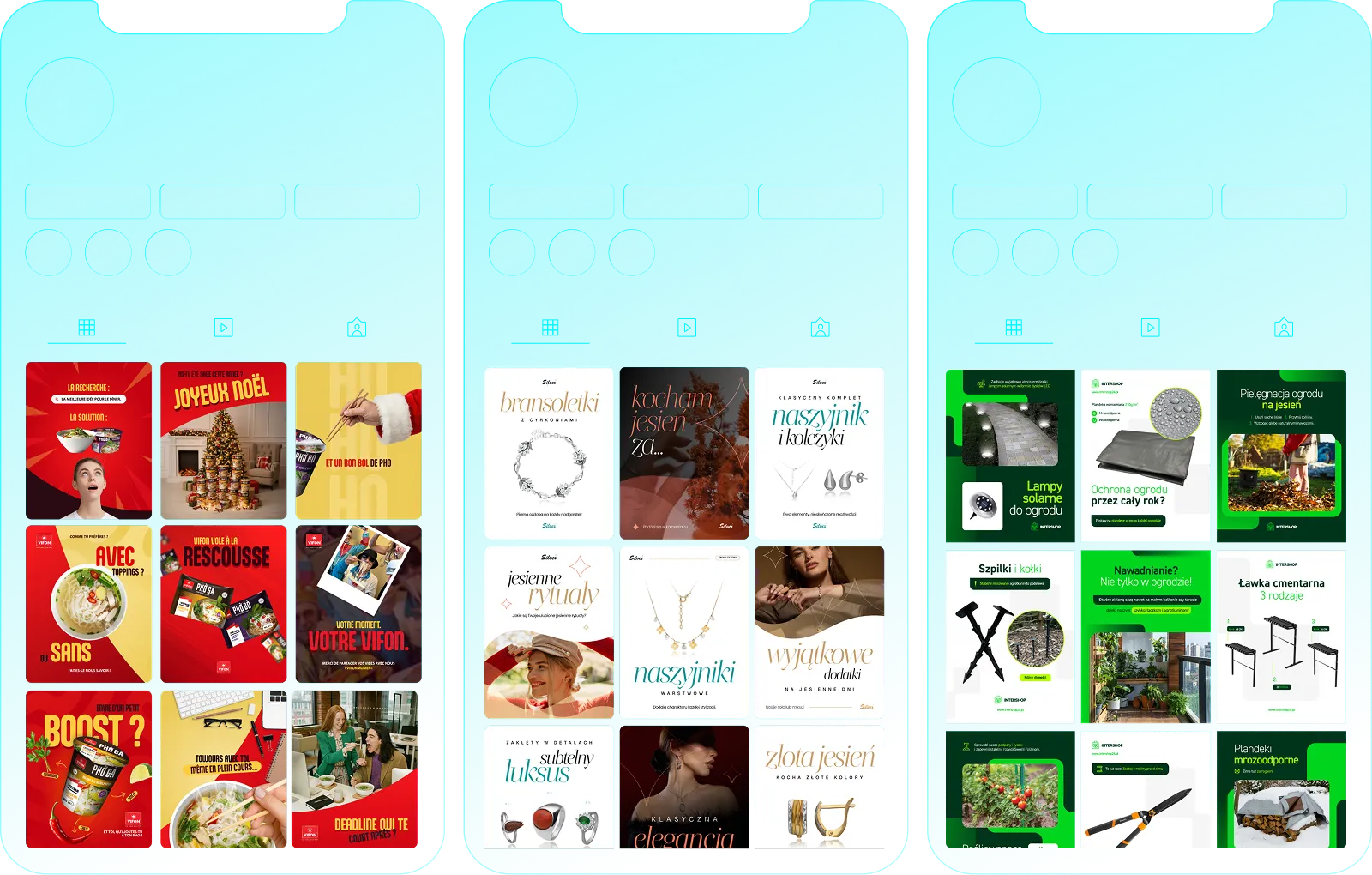

Content that shows your brand is alive and close to its audience.
Informational, sales, and branding posts created so that your fan page is not just a bulletin board, but a place for regular engagement.
Facebook is not just about posting, but also about responding.
Comments, messages, and ongoing user questions help build trust, bridge the gap, and show your brand as accessible, active, and attentive.

In Meta, Instagram, or TikTok campaigns, most traffic comes from phones. If your mobile site doesn't deliver, your ad budget disappears faster than the user can make a decision.
Shopping and leaving contact details rarely happen at a computer these days. They happen in the evening, on the go, with a phone in hand. The phone is where the decision happens, not the computer screen.
Page layout, content, and CTAs must be designed for the user's phone and for sales. If a mobile site design doesn't guide the user to the goal, sales simply drop off.
Everything we do is measurable. We implement full tracking from day one so that decisions are based on data, not gut feeling. We know where your customers come from, how much it costs to acquire them, and which actions actually drive results.
This is the foundation of every project we manage.










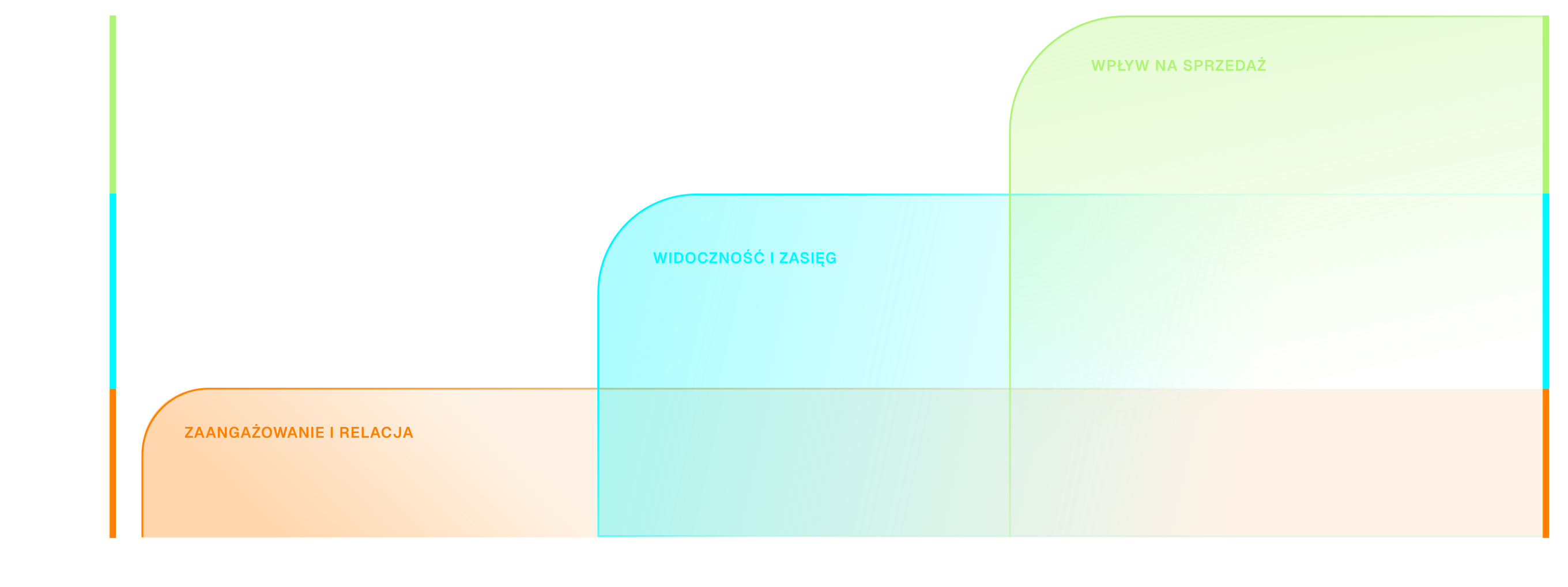
Building a company fan page doesn't happen overnight. Every post adds a building block to your reach, engagement, and brand awareness on Facebook. The algorithm rewards profiles that communicate regularly and consistently.
It’s not about a single viral post. It’s a system that builds a stronger brand position on the platform month after month.
We define how the fanpage should speak to its audience
GOAL: Give the Facebook page a consistent character so the brand is recognizable and credible from the very first interaction.
We establish a rhythm for posts and topics
GOAL: Maintain the fanpage regularly, avoiding random posts created just for the sake of posting.
We create content tailored for Facebook
GOAL: Create content that organizes the offer, captures attention, and helps the audience get to know the brand better.
Managing post-publication activity
GOAL: Demonstrate that the fanpage is not just a bulletin board, but a vibrant space for interaction between the brand and its audience.
Scaling what works best
GOAL: Gradually improve fanpage quality, audience engagement, and the impact of Facebook on brand awareness.

Julia is responsible for the concept and production of content that organizes brand communication on social media. She ensures the form, consistency, and quality of content that makes the brand recognizable and consistent in the daily feed. The content created strengthens the relationship with the audience, builds engagement, and consistently works on brand value in the long term.
MEET THE SKY TEAMEvery month, you get a clear picture of your results along with an analysis of the situation
Regular online meetings to discuss results, priorities, and actions
You talk to the specialist who is actually managing your project
You have constant contact with the team via a shared messenger
Clear terms of cooperation. We retain clients with results, not contracts
We suggest directions, tests, and moves that make sense
Strategy, creative, performance, web, and analytics under one roof
We speak clearly, concretely, and without agency jargon


Since we started working with Igor and his team, the store we work on has genuinely grown and, above all, we understood that advertising can be done far better, smarter and more effectively. This is a partnership focused on growth and numbers, not empty promises.


Sky Agency is our third marketing company and we hope it will be the last. They run marketing for our two clothing brands and from the very beginning we felt they treat our cooperation in a truly individual way. Beyond marketing itself, they also help us grow the companies and look at everything much more broadly. What we value most is the communication. It is fast, to the point, and we constantly feel that someone is on top of things. There is never a problem getting an answer or discussing new ideas. You can tell this is built by people who genuinely put their heart and commitment into their work. Working like this simply feels calm and supported, and that matters a lot to us!

I have worked with Sky Agency for several years on various projects – a website, recruitment process automation, SEO. If I had to sum it up in one sentence: this is an agency where there is a real person behind the words, someone who takes responsibility. Igor as CEO does not disappear behind the team when things get difficult. That is rare and I value it. Together we built a tool for managing the recruitment of event staff – an application form, a candidate verification panel, automatic notifications, email integration. It sounds simple. At a scale of several hundred contractors a year and with the specifics of temporary work, it was a complex, non-standard brief. And I will say more: in difficult moments you see who you are really working with. And I do. I recommend them – especially to companies with non-obvious needs looking for someone who will dig deeper than a slide deck.

I recommend working with Sky Agency. Despite a very complex project requiring many custom solutions and integrations, everything was delivered professionally and in line with our expectations. The team stayed engaged throughout the whole process, and all key revisions were implemented until the final result was achieved.
.jpg)
We have been working with Sky Agency since 2022 – SEO, the rmcpolska.pl website and IT development support. More than four years of steady, well-organised cooperation. Igor and the team understood the specifics of our industry and are responsible for growing our online presence – from SEO to the new website we are designing together. IT tickets are handled quickly and without downtime. We value their straightforwardness, industry knowledge and partnership approach. We recommend them to any company looking for an agency that combines marketing with the technical side of business.









Facebook remains one of the most important places where customers check out a brand. Before they send a message, call, buy a product, or ask for a quote, they often look at the company fanpage. They check if the brand is active, how it speaks, what it posts, how it responds to comments, and whether it looks credible.
That is why managing Facebook should not consist of throwing up random posts every now and then. A company fanpage acts as a living business card today: it shows your activity, communication style, relationship with the audience, offers, values, and customer service approach. If a profile is neglected, outdated, or chaotic, it can have the opposite effect. Instead of strengthening trust, it starts to raise questions.
As a social media agency, we manage Facebook based on strategy, regularity, consistency, and data. We create content that organizes brand communication, stops the scroll in the feed, and helps build recognition. We don't post just for the sake of posting. Every post, reel, story, or message has a purpose: to educate, engage, sell, remind people of the brand, or build a relationship.
Managing a Facebook fanpage is not just about preparing graphics and captions. It is constant care for one of the most important channels for connecting with your audience. A company profile should be a place where a user quickly understands what the brand does, what makes it stand out, and whether it is worth engaging with.
A well-managed Facebook page has a rhythm. It doesn't just appear when the company has a promotion. It showcases the brand's life, offers, people, reviews, behind-the-scenes content, results, news, events, education, and content that the audience can actually use. This ensures the fanpage is not just a bulletin board, but a place that gradually builds trust.
The new subpage rightly highlights that Facebook works through a cumulative effect: every post adds something to your reach, engagement, and brand awareness. This is not a channel for a single viral post. It is a system that strengthens the brand over time, provided the communication is regular and consistent.
Yes, but only if it is managed consciously. Facebook should not be treated as an archive of old messages or a place to dump posts copied from Instagram. It remains an important platform for local businesses, service providers, e-commerce, educational brands, event organizers, restaurants, clinics, B2B companies, and businesses that want to stay in touch with their customers.
A company fanpage often plays several roles at once. It is a business card, a service channel, a place for news, a space for community building, and additional sales support. A user might find your profile through a search engine, an ad, a recommendation, a group, an event, or a link on your website. Once they arrive, they should see a brand that is present, focused, and trustworthy.
In practice, Facebook for business works best when it is not managed in isolation. It should support your website, Meta Ads campaigns, local activities, sales, customer service, and other social media channels.
Before creating a content plan, you need to answer a few simple but important questions: who is the brand speaking to, what is its style, what does it want to achieve, and what topics are truly important to its audience? Without this, managing a Facebook page quickly turns into a series of random posts.
A communication strategy defines the brand's tone, content pillars, posting frequency, formats, goals, and how to respond to the audience. A local restaurant will speak differently than an online store, a law firm, a clinic, a premium brand, a manufacturer, a training company, or a B2B agency. A good fanpage doesn't sound like everyone else. It has its own voice.
In our strategy, we determine which content should build awareness, which explains the offer, which shows social proof, which engages the community, and which leads to sales. This ensures the profile doesn't just live from promotion to promotion, but builds a fuller picture of the brand.
A Facebook content plan is a monthly or recurring publication schedule. It shows what we are publishing, when, in what format, and why. It is a tool that organizes work and helps avoid the situation where a post topic is invented an hour before publication.
In our content plan, we include seasonality, promotions, advertising campaigns, events, industry holidays, audience needs, and topics worth developing in longer series. This makes communication more consistent and allows the brand to show itself from different sides: expert, product-focused, human, sales-oriented, and relational.
A content plan shouldn't be a rigid calendar with no room for reaction. Facebook requires timeliness. If something important happens in the industry, a good context arises, or the audience starts asking similar questions, it's worth reacting. Good Facebook management combines planning with vigilance.
There is no single format that works for every brand. Facebook provides space for various types of content: text posts, graphics, photos, carousels, video, Reels, Stories, events, live streams, links, polls, customer reviews, and educational materials. The art lies in not throwing everything out at once, but matching the format to the goal.
An educational post can explain a customer's problem. A carousel can show a process, an offer, or a comparison. A video can bring the people behind the brand closer. Reels can quickly grab attention and increase reach. Stories can maintain a daily presence. A sales post can lead to a specific action, but it should have context rather than sounding like a flyer ripped out of a promotional circular.
On the new subpage, two areas stand out: feed and video, and stories and everyday life. This is a good division because Facebook needs both content that organizes the brand's image and formats that are more current, fast-paced, and less formal.
Users scroll quickly. They see posts from friends, groups, ads, reels, news, and content from other brands. To grab attention, a post must have a clear reason for existing. A good hook, a readable graphic, a concrete thought, an emotion, useful information, or a question that truly relates to the audience.
Facebook posts don't have to be long, but they must be written with intent. A sales post is written differently than an educational, informational, engaging, or crisis communication post. In every case, one thing is important: the audience must quickly understand what the brand wants to say and why they should care.
Good content on Facebook isn't just correct—it's recognizable. After a few posts, the audience should feel that the brand has its own character, not just a graphic template.
Video and short-form content are a vital part of managing Facebook today. Reels allow you to showcase a brand faster, more dynamically, and in a way that aligns with how users consume content on their phones. It’s a great format for presenting products, tips, behind-the-scenes, customer reviews, transformations, short stories, events, and quick explanations.
Not every video needs to be a major production. Often, content that is simple, well-thought-out, and tailored to the platform works better than a polished film that looks like an ad disconnected from the feed. What matters are the first few seconds, the pacing, captions, vertical format, a clear message, and a natural call to action.
When managing Facebook, we plan video so it isn't just an "occasional" addition. If a brand has the potential to showcase people, products, processes, or results, short-form content can become one of the most powerful elements of its communication.
Stories don't have to be perfect. Their strength lies in their timeliness. It’s a format where a brand can show what’s happening right now: behind-the-scenes, product availability, a snippet of an event, a quick announcement, a question for the audience, a reminder about an offer, a reaction to comments, or simply everyday life.
Well-managed Stories ensure that the brand doesn't just appear in scheduled posts. It is closer to the audience, more vibrant, and less formal. This is especially important for companies that want to build relationships, not just publish announcements.
In managing Facebook, we treat Stories as part of the communication strategy, not as a random addition. A plan can indicate directions, but the best Stories often arise from current situations. That is why collaboration with the client and quickly utilizing materials from the brand's daily life is important.
Managing Facebook doesn't end the moment a post is published. The conversation begins after publication. Comments, private messages, reviews, reactions, and questions are all part of the brand experience. If they go unanswered, the user may conclude that the company isn't listening or doesn't take contact seriously.
Facebook comment moderation includes answering questions, directing users to the right contact, responding to reviews, organizing discussions, reporting content that violates rules, and maintaining a culture of conversation. Message moderation, on the other hand, helps shorten the path to contact, sales, or customer service.
Not every response needs to be long. It is important that it is quick, consistent with the brand's tone, and helpful. Facebook is a public space, so the way you react is seen not only by the person asking but also by other followers. These are small moments that can significantly influence trust.
Facebook doesn't always sell after a single post. It works more through presence, reminders, trust, and gradually familiarizing the audience with the brand. A user sees a post, then a customer review, then a Reel, then an ad, then returns to the fan page, checks the comments, and only then reaches out.
That is why managing a company Facebook profile should be linked to a sales mindset, but it cannot turn into constant promotion. Audiences quickly tire of brands that only say "buy now." They need content that explains things, shows value, facilitates decisions, or builds the feeling that there are real people behind the brand.
Facebook can support sales through offer posts, product presentations, customer reviews, project showcases, promotion announcements, events, groups, live streams, educational content, and driving traffic to the website. It makes the most sense when social media is part of a larger system: ads, a website, SEO, a newsletter, and customer service.
For many local businesses, Facebook is one of the main channels for customer contact. Restaurants, clinics, beauty salons, language schools, educational institutions, trainers, local shops, service companies, and event organizers need a place where they can quickly inform people about changes, appointments, promotions, new arrivals, and the brand's daily life.
Managing Facebook locally requires a slightly different approach than national communication. Here, the context of the location, the audience's language, local events, recommendations, reviews, photos of completed work, and quick responses to questions are more important. A local customer often doesn't need a massive branding campaign. They need to know that the company is active, available, and trustworthy.
A good local fan page can effectively shorten the path to a visit, booking, phone call, or message.
In e-commerce, Facebook can support sales, remarketing, promotions, product launches, customer communication, and building trust in the store. However, the profile shouldn't just be a product catalog. If every post looks like an ad with a price tag, users will quickly stop engaging.
A well-managed Facebook page for an online store showcases products in use, inspiration, product pairings, new arrivals, customer reviews, guides, behind-the-scenes content, FAQs, store advantages, and seasonal content. It helps customers choose, compare, understand the product, and feel more confident in their purchase.
In e-commerce, consistency with Meta Ads campaigns is also important. Organic content can reinforce ads, test messaging, showcase social proof, and build brand awareness that later helps with paid sales.
Facebook is sometimes underestimated in B2B, but it still makes sense for many industries. Not always as a primary lead generation channel, but as an element of credibility, communication, employer branding, and brand presence.
B2B companies can use Facebook to showcase projects, the team, events, news, tips, case studies, behind-the-scenes operations, trade show participation, organizational culture, and educational content. The profile can support recruitment, build trust, and make it easier for a client to verify if the company actually operates the way it claims on its website.
In B2B, Facebook is often not the last click before an inquiry. It is one of the touchpoints that helps the recipient form a more complete picture of the brand.
The new subpage strongly emphasizes mobile, and rightly so. Facebook users most often scroll on their phones: during a break, in the evening, while traveling, or between tasks. Decisions are made quickly, and content competes for attention on a small screen.
This means that posts, graphics, Reels, stories, and links must be designed for mobile. Graphics should be legible without zooming. Videos should have subtitles and a strong hook. Descriptions should guide the user, and the CTA must not get lost in a wall of text. If a post directs to a website, the landing page must also work well on a phone.
Facebook management does not end with the profile itself. You have to look at the entire path: from the post, through the click, to the contact, purchase, or booking.
Organic reach on Facebook does not come from the mere act of publishing. The platform rewards content that triggers reactions, comments, shares, views, and genuine interest from the audience. This does not mean every post has to be controversial or written for cheap interaction. It means the content must have value for people, not just for the publishing calendar.
Engagement is built through topics relevant to the audience, clear questions, interesting formats, useful tips, emotions, timeliness, and a consistent style. Sometimes a simple behind-the-scenes post gets a good result. Sometimes a customer testimonial. Sometimes a practical tip. Sometimes a Reel that shows a product better than a description.
In our Facebook management, we analyze which content actually activates the audience. It is not about artificially "gaming the algorithm." It is about understanding what the brand's community responds to.
Effective Facebook management requires looking at the numbers, but without a blind cult of statistics. Reach, engagement, clicks, comments, shares, follower count, video views, and story reactions matter, but so do the quality of interactions and the impact of content on inquiries.
A strong promise appears on the new subpage: actions are measurable, and decisions are based on data, not gut feelings. This is a good standard for fan page management, because without analysis, it is easy to repeat formats that are liked internally but do not resonate with the audience.
Every month, we check which posts performed best, which topics grabbed attention, where users clicked, which formats are worth developing, and what needs to change. Data doesn't replace creativity; it helps direct it where it makes the most sense.
Facebook management can cover the entire process of running a company profile: from strategy and planning to content creation, publishing, moderation, and reporting. The scope should be tailored to your brand, industry, and the desired level of fan page activity.
As part of our Facebook management services, we can handle:
This approach ensures that the fan page is not just an afterthought in your marketing. It becomes an active communication channel that supports your brand image, sales, and relationships with your audience.
We start the process by understanding the brand. We review its current messaging, the look of its fan page, past content, what worked, what’s missing, and how it compares to the competition.
Then, we organize the strategy. We define the communication style, content pillars, goals, and formats. This ensures the brand doesn't sound different every time and avoids publishing posts without a clear direction.
Next, we prepare a content plan. We map out topics, formats, deadlines, and tasks for each publication. This plan ensures consistency while leaving room for current events and quick reactions.
The next stage is content creation. We develop copy, graphic concepts, carousels, stories, Reels scripts, and messaging tailored for Facebook. We ensure everything is mobile-friendly, brand-consistent, and written in a natural tone.
After approval, we publish the content and manage the profile on an ongoing basis. We moderate comments, engage with the audience, and check how the content performs after it goes live.
Finally, we analyze the results. We report, draw conclusions, and develop the formats that have the greatest potential. This process corresponds to the structure shown on the new subpage: from strategy, through content planning and creation, to publishing and developing results.
Reporting only makes sense if it helps you make decisions. That is why a Facebook management report shouldn't be a collection of screenshots and random numbers. It should show what was published, which content worked, where engagement appeared, what is worth repeating, and what needs to be changed.
We analyze organic reach, reactions, comments, shares, clicks, follower growth, video performance, story effectiveness, and the best-performing formats. We add our commentary to this: what it means for the brand and what actions we recommend next.
Clear communication is strongly emphasized on the site: monthly reports, status updates, direct contact with a specialist, Slack, proactivity, and speaking without agency jargon. This is worth keeping in the SEO content as well, because when managing social media, the client needs to know not only that something has been done, but also what the point of it is.
A good Facebook agency shouldn't act like an external publishing schedule. It should understand the brand, the audience, the offer, the competition, and the business goals. Only then can it create content that fits the company and has a chance to be remembered.
Managing a company Facebook page requires a combination of copywriting, visual sense, platform knowledge, analytics, moderation, and strategic thinking. You need to know when to educate, when to sell, when to show behind-the-scenes content, when to respond to a comment, and when to drop a topic that doesn't fit the brand.
Not every trend is worth following. Not every post has to be funny. Not every industry needs daily posts. Our role is to choose the rhythm, tone, and formats so that Facebook supports your brand rather than forcing it into communication that sounds out of place.
You might need full fanpage management, a communication overhaul, regular posts, video content, stories, comment moderation, sales support, or a profile that stops looking like a neglected business card. Each of these goals requires a different approach.
We will manage your Facebook presence so that your profile has a strategy, rhythm, character, and measurable foundations. We will take care of the content plan, posts, Reels, stories, publishing, moderation, analysis, and communication development.
Facebook doesn't have to be a place where a brand fights for attention with random posts. It can be a channel that contributes to brand awareness, trust, and customer decisions every single day. That is exactly what well-managed social media is all about: the brand doesn't just appear in the feed, it stays in the memory.
Do you have a store, service, or brand you want to genuinely grow online?
Head over to our simple contact form and let us know what you need today.
We will get back to you with a concrete proposal for next steps and a time for a brief call.